QUICK TAKEAWAY
Start with 10,000 mAh for a convenient daily top-up; consider 20,000 mAh when extra backup matters more than a smaller carry kit. Then compare the actual models. Capacity does not establish charging speed, laptop compatibility or a guaranteed number of phone charges.
Choosing between a 10,000 mAh and a 20,000 mAh power bank is mainly a decision about how much backup you want to carry. The bigger number can look like better value, but the useful choice depends on your devices, access to sockets and willingness to carry the complete setup.
This comparison helps you choose a capacity class. For the full checklist on ports, cables, support and compatibility, read our guide to choosing a power bank.
1. Compare the trade-offs at a glance
| Buying question | 10,000 mAh | 20,000 mAh |
|---|---|---|
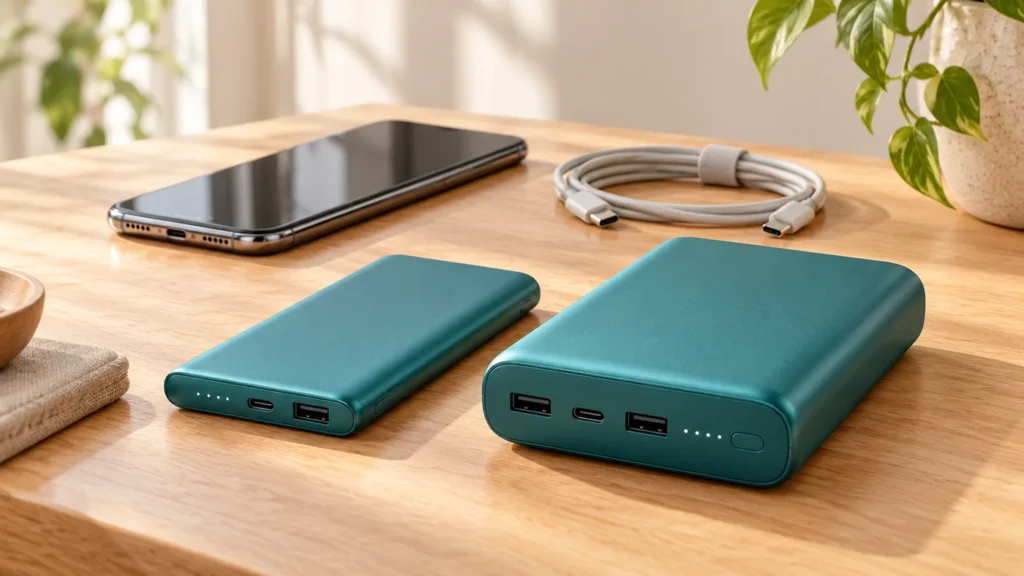
| When should I shortlist it? | When occasional top-ups and convenient daily carry are the priority. | When repeated charging or longer gaps between sockets are the priority. |
| How much nominal capacity? | 10,000 mAh at the stated cell voltage. | Twice that charge capacity; twice the nominal energy only at the same cell voltage. |
| How portable is it? | Check the actual weight and dimensions; look for a setup you will carry. | Check whether the extra backup justifies the particular model’s size and weight. |
| Will it charge faster? | Depends on output, protocol, cable and device. | The larger capacity alone does not establish faster charging. |
| Can it charge two devices? | Check ports and simultaneous-output limits. | Check those same specifications; capacity alone does not establish this. |
| How long will it take to recharge? | Use the model’s input rating and documented recharge conditions. | Compare the input rating and recharge time before choosing the extra capacity. |
The use cases in this table are DesiredCart’s shortlist suggestions, not performance results for every product in either class.
2. Understand what the mAh numbers tell you
Anker explains that the headline mAh rating usually describes the internal cells. USB output operates at a different voltage, and conversion losses reduce the energy available at the output. Your phone also loses some energy during charging. That is why dividing the power bank’s advertised mAh by your phone’s battery mAh does not give a guaranteed number of full charges.
An illustrative energy comparison: at a nominal cell voltage of 3.7 V, 10,000 mAh represents 37 Wh and 20,000 mAh represents 74 Wh before losses. These are calculated examples, not the usable output of every model. Read the exact product’s Wh label and rated output capacity.
Compare output-capacity figures at the same stated voltage and conditions. If a brand advertises a number of phone charges, look for the named phone, test conditions and charging method. Use that claim as a reference for that model rather than applying it to every device you own.
3. When to shortlist a 10,000 mAh power bank
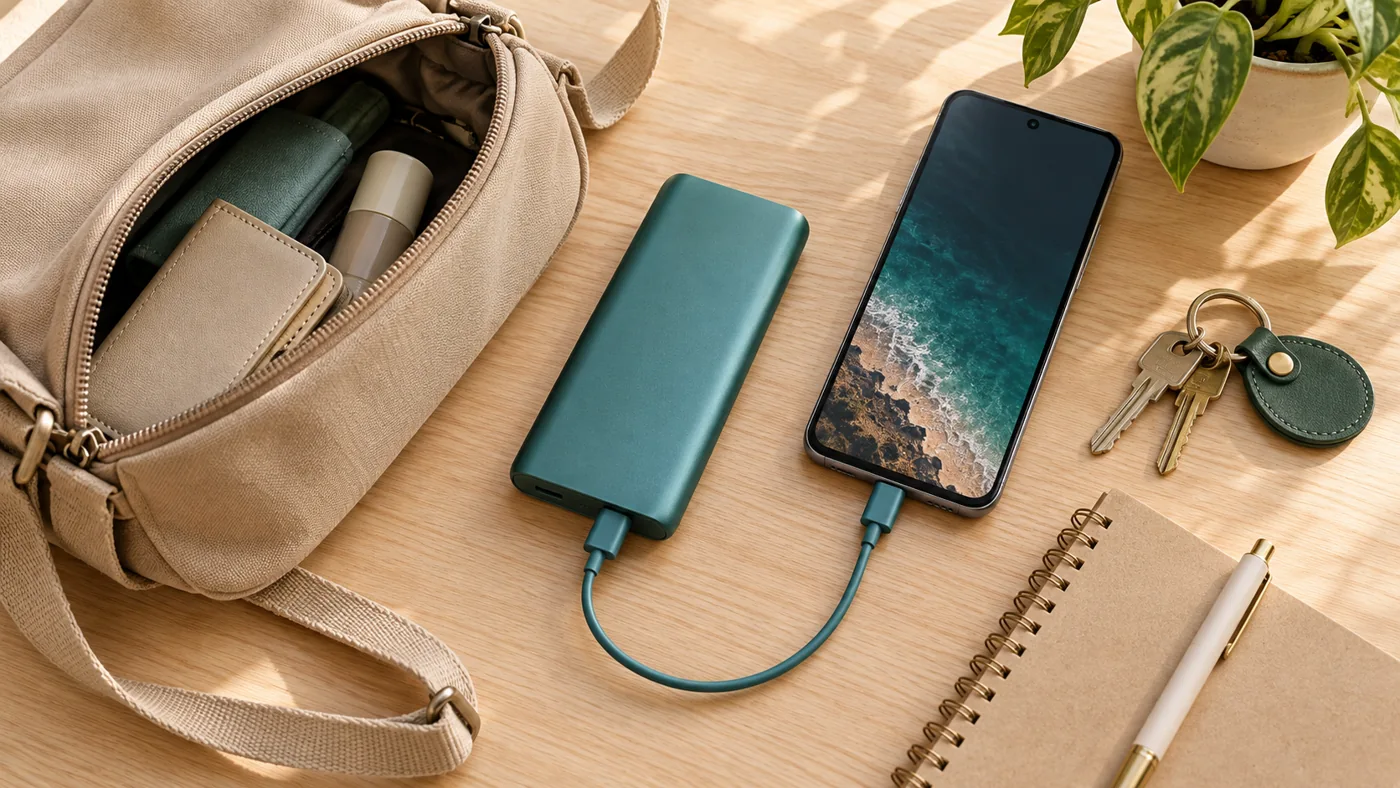
Our editorial starting point is the smaller capacity class when your main problem is an occasional low battery during the commute, a few extra hours outside or a phone top-up before reaching home. It is worth considering when you usually have a reliable opportunity to recharge between outings.
Compare the whole carry kit: power bank, required cable and any adapter. Check whether it fits the pocket or bag compartment you intend to use, and whether the connected cable is convenient when you are holding the phone.
Choose this direction if: a shortlisted model’s documented backup meets your needs and carrying it is comfortable. Reconsider if you regularly exhaust your backup, need to charge several devices or frequently spend long periods away from sockets.
4. When to shortlist a 20,000 mAh power bank
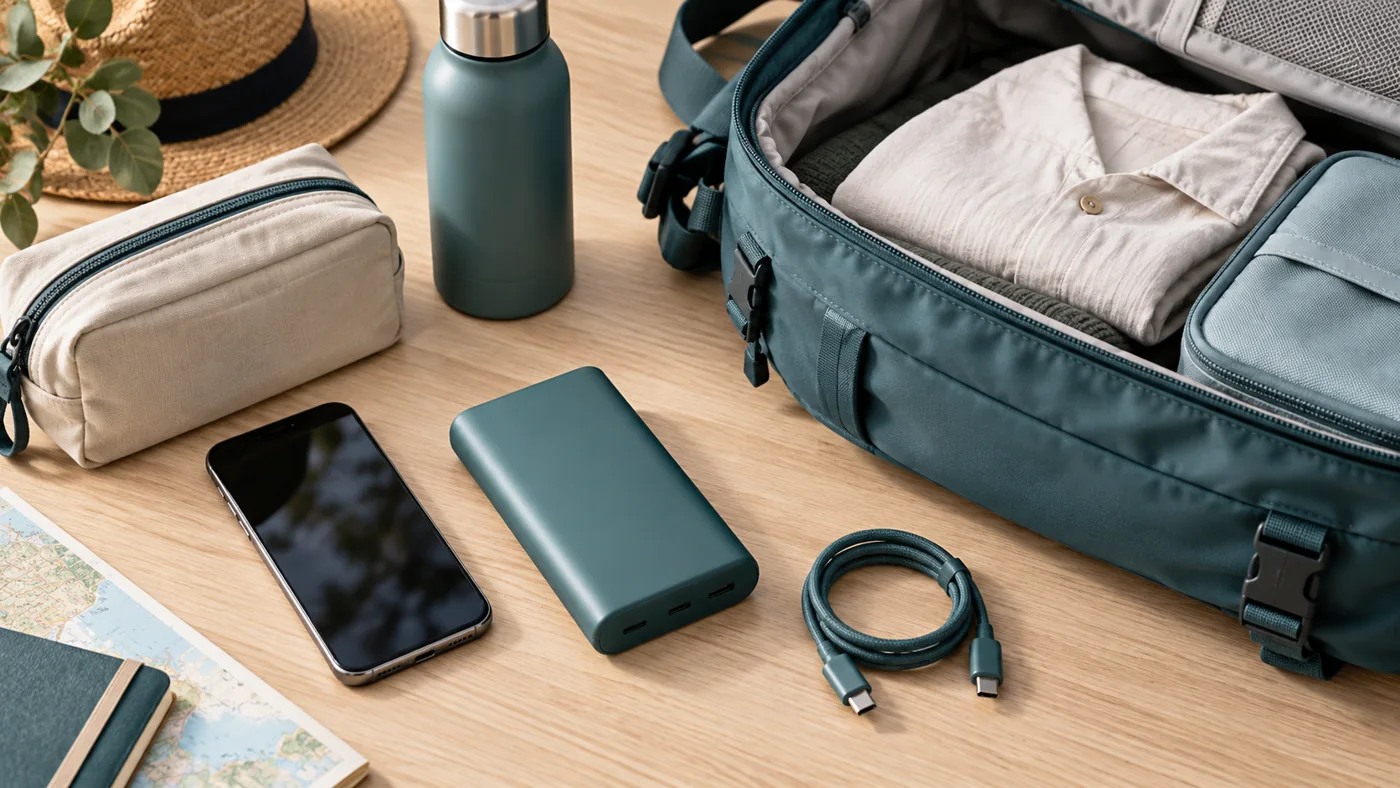
Start with the larger capacity class when you want a bigger reserve for longer outings, repeated phone charging or a second device. Make a list of what you expect to charge and when you next expect to reach a socket.
Check whether the exact model’s extra capacity is useful enough to justify its weight, dimensions and recharge routine. A larger reserve helps only if you actually bring it along and keep it charged.
If you want to charge a phone and another device together, verify the available power for that port combination. For a laptop, check the laptop’s charging requirements and the bank’s supported output profiles separately. Neither a 20,000 mAh rating nor a USB-C port establishes laptop compatibility.
Planning your packing space too? Our backpack buying guide covers organising daily essentials and short-trip extras.
5. Separate capacity from charging speed
USB-IF describes USB Power Delivery as a standard for flexible power delivery. The supported capabilities still depend on the particular product. When comparing power banks, read the output profiles of the port you will use, the charging protocol required by your device and the cable requirements.
Imagine a shortlist where the 10,000 mAh model supports your phone’s preferred charging setup while the 20,000 mAh model does not. The larger model’s capacity number does not resolve that mismatch. Check compatibility before choosing between capacities.
Read single-port and simultaneous-output specifications separately. Also distinguish output, which charges your device, from input, which recharges the power bank. If a charger or cable is sold separately, include it in the purchase cost.
6. Compare recharge time and the complete cost
Extra capacity means more energy to replenish when comparing the same cell voltage, but actual recharge time also depends on input power and charging conditions. A capacity label alone is not enough to compare recharge times.
Ask how long each model takes to recharge, which wall charger the claim uses and whether that charger is included. Consider your own routine: an overnight charging opportunity is different from a short stop between outings.
Compare price, documented output capacity, seller, warranty and support together. Avoid choosing only by price per advertised mAh. Paying for extra reserve that you rarely carry may solve less of your problem than a suitable smaller setup.
If you intend to fly, check your airline’s current rules for your exact product, itinerary, packing and onboard use before travelling. This article does not establish airline approval for either capacity class.
7. Make your decision with this checklist
- I have identified the devices and charging gaps I need to cover.
- I have compared rated output capacity and the conditions behind recharge claims.
- The port, charging protocol and cable suit my device.
- I know the output limits when charging devices together.
- I have checked the actual weight and dimensions of both models.
- I understand recharge time and any extra charger or cable cost.
- I have compared the seller, warranty and support process.
- If flying, I have checked current airline requirements.
DesiredCart’s view: shortlist 10,000 mAh when sufficient backup and convenient carry are your priorities. Shortlist 20,000 mAh when you need a larger reserve and accept the particular model’s carrying and recharging requirements. Finish the decision with specifications for the exact products, not the capacity numbers alone.
Sources and editorial approach
This is a research-based comparison of capacity classes, not a hands-on test or a ranking of particular power banks. Use-case suggestions and shopping questions are DesiredCart’s editorial guidance. The energy example is a calculation at an explicitly assumed voltage. Manufacturer specifications take precedence for each product.
References last checked: 12 October 2026.
Learn how we review or read our affiliate disclosure. This article contains no affiliate purchase links.